
Onsite Staffing Support: What It Is and When Virginia Manufacturers Actually Need It
Most staffing relationships follow a familiar pattern.
You call when you have an open role. The agency sends candidates. You hire the best one available and hope they last.
That model works well enough for operations with moderate, predictable staffing needs. But for Virginia warehouse and manufacturing facilities dealing with high volume, frequent turnover, or staffing that directly drives production output, a different approach often makes more sense.
Onsite staffing support puts a dedicated recruiter inside your facility rather than at a branch office miles away. It is a different model with a different set of benefits. This guide explains what it actually involves and how employers can tell when it makes sense to consider it.
Direct Answer
Onsite staffing support, sometimes called an embedded recruiter or vendor-on-premise model, places a dedicated staffing professional at your facility on a regular or full-time basis. Rather than managing your workforce from a remote office, they work alongside your team, understand your operation firsthand, and respond to staffing needs in real time. It tends to work best for operations with high staffing volume, significant turnover, or production schedules that cannot absorb gaps.
What Onsite Staffing Support Actually Looks Like
The core difference between onsite staffing support and a traditional staffing model comes down to proximity and presence.
With a traditional model, a recruiter at a branch office handles your account alongside dozens of other clients. They know your job titles and your pay rates. What they often do not know is what your floor actually looks like at 6am, which supervisors your workers respond to best, or why the same role keeps turning over every eight weeks.
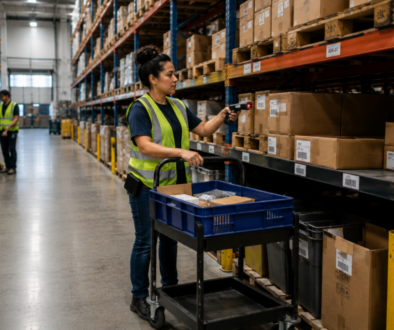
An onsite staffing partner works differently. They are in your building regularly, sometimes daily, depending on the size and complexity of the operation. They learn the pace of your floor, the expectations of your supervisors, and the qualities that tend to make someone a long-term fit in your environment.
That knowledge changes what they can do. When a shift comes up short, they are not waiting for a call to reach the right person at a branch office. When a new hire is struggling in their first week, they know about it before it becomes a separation. When production volume is about to increase, they are already preparing the candidate pipeline.
The staffing work does not stop when the placement is made. It continues on the floor, every day.
Over time, employers often find that the value of an onsite partner is not simply having someone available. It is having someone who understands the operation well enough to spot challenges early, adjust quickly, and help keep production moving.
What Problems It Is Actually Designed to Solve
Onsite staffing support is not a universal solution. It is designed to address specific operational challenges that a traditional staffing model often struggles to solve.
Most employers don’t start looking at onsite staffing because they want a different staffing model. They start looking because staffing has become an operational problem.
The situations where onsite support tends to make the biggest difference include:
- High staffing volume. When an operation is consistently placing thirty or more workers per month, managing that volume from a branch office creates delays, communication gaps, and accountability problems that compound over time.
- Turnover that affects output. When a single absence stalls a production line or forces overtime, the cost of slow response is immediate. An onsite partner can respond to call-offs, gaps, and urgent needs in real time rather than through phone calls and voicemails.
- Inconsistent candidate quality. When workers arrive without a clear understanding of the role, the environment, or the expectations, early turnover is almost guaranteed. An onsite recruiter who knows the facility can set more accurate expectations before a candidate ever starts.
- Supervisor and HR bandwidth. When internal teams are spending more time managing staffing problems than running the operation, an onsite partner can absorb much of that administrative and coordination work.
What we see consistently across warehouse and manufacturing facilities in Virginia is that these problems rarely show up in isolation. High volume creates pressure on screening. Rushed screening leads to poor fit. Poor fit drives turnover. And turnover pulls supervisors away from the floor to deal with staffing instead of production. By the time an employer calls to discuss a different approach, that cycle has usually been running for months.
What It Does Not Replace
Onsite staffing support works best as an extension of a strong staffing partnership, not as a replacement for one.
It does not replace good recruiting fundamentals.
You still need a strong candidate pipeline, an effective screening process, and a focus on placing people who are the right long-term fit for the role.
What onsite support changes is the speed and quality of the feedback loop. When the person managing your workforce is in the building, problems surface faster, adjustments happen sooner, and the staffing partner has a much clearer picture of what is actually working and what is not.
Across the warehouse and manufacturing employers we work with, the facilities that get the most out of an onsite arrangement are the ones that treat it as a genuine partnership rather than a vendor service. The embedded recruiter learns the operation. Supervisors communicate openly about what is and is not working. Together, those ongoing conversations lead to better hiring decisions and stronger long-term results.
Proximity does not fix a broken recruiting process. But it does make a good recruiting process significantly more effective.

How Virginia Operations Can Tell If They Need It
Not every warehouse or manufacturing facility in Virginia needs an onsite staffing partner. For operations with steady, manageable staffing needs and a traditional agency relationship that is working, the added structure may not be necessary.
The situations that tend to point toward onsite support include:
- Staffing problems are affecting production output on a regular basis
- The same roles are turning over repeatedly without improvement
- Internal HR or operations teams are spending significant time managing staffing rather than running the facility
- Communication with the current staffing agency is reactive rather than proactive
- Volume or complexity has grown beyond what the current model can handle consistently
In our experience working with Virginia warehouse and manufacturing employers, the tipping point is usually not one big problem. It is the accumulation of smaller ones: the call-offs that go unaddressed, the new hires who were not prepared for the pace, the supervisors who have stopped expecting the staffing relationship to improve.
When staffing starts to feel like a constant fire to put out rather than a function that supports the operation, that is worth paying attention to.
How We Think About Onsite Staffing
The Candidate Source does not offer a one-size-fits-all onsite program. We work with warehouse and manufacturing employers across Virginia to understand the scope of the staffing need before recommending an approach.
For some operations, that means more frequent visits, proactive communication, and a deeper understanding of the facility before any placement is made. For others, a more structured onsite arrangement makes sense based on volume and complexity.
What does not change is the goal: to understand how your operation runs well enough that the people we place are genuinely set up to succeed.
If you are evaluating whether onsite staffing support is the right fit for your Virginia facility, we are glad to have a direct conversation about what that could look like.
Ready To Talk Through Your Options?
Onsite staffing support is not the right answer for every operation. But for Virginia warehouse and manufacturing employers dealing with high volume, persistent turnover, or staffing gaps that are affecting production, it is worth understanding what a closer partnership could look like.
Contact The Candidate Source to talk through your current staffing challenges and find out which approach makes the most sense for your operation.